
Find Connecticut Criminal Records
Criminal records in Connecticut are kept by several state agencies. The State Police Bureau of Identification maintains official rap sheets and conviction history. The Judicial Branch tracks court cases from arrest through sentencing. The Department of Correction holds data on current inmates. You can request these records by mail or search some online. This guide shows how to access arrest records, case files, and conviction data in Connecticut.
Connecticut Criminal Records Quick Facts
Where to Find Connecticut Criminal Records
The State Police Bureau of Identification serves as the main source for criminal history records in Connecticut. Located at 1111 Country Club Road in Middletown, this office processes requests for rap sheets and conviction history. They operate Monday through Friday from 8:30 AM to 4:00 PM. You can reach them by phone at (860) 685-8480 with questions about forms or fees. All mail requests go to their Middletown address. The SPBI does not accept email or fax requests for criminal records.
Start your search for Connecticut criminal records at the State Police Bureau of Identification website. The portal offers forms and instructions for requesting records.
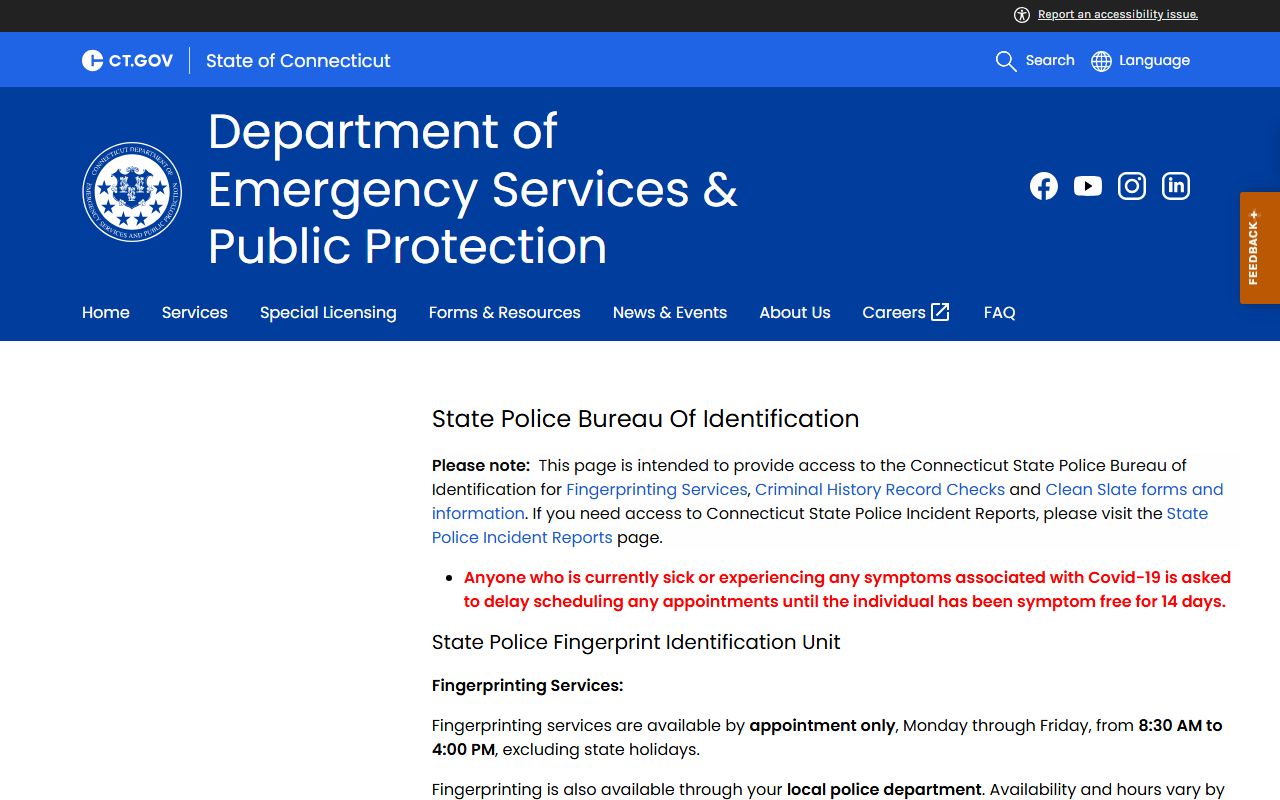
The Bureau handles thousands of requests each year from employers, landlords, and individuals. Their records include arrests, convictions, and pending cases from across Connecticut. Results typically arrive within two to four weeks by mail. Expedited services are not available for standard requests.
The Division of Criminal Justice does not provide records to the public. They direct all requests to the State Police or Judicial Branch. Their office at 300 Corporate Place in Rocky Hill can be reached at (860) 258-5800. They prosecute cases but do not maintain public record databases.
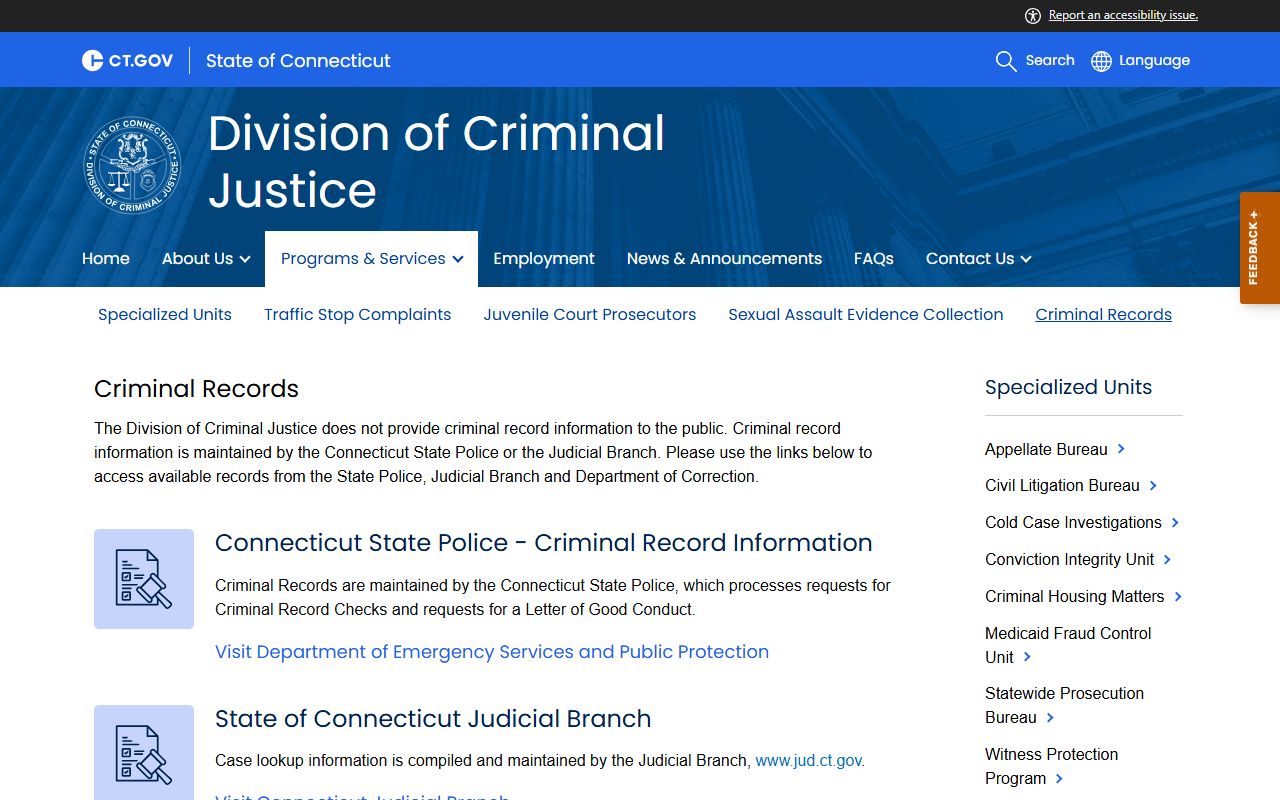
The Division of Criminal Justice works with State's Attorneys across all judicial districts. They focus on prosecution rather than public record access. For actual case files and conviction data, contact the agencies listed above.
Under CGS § 1-210, most records held by public agencies are open to inspection. This law forms the basis for accessing criminal records in Connecticut.
How to Request Criminal Records in Connecticut
You have two main options for requesting criminal history in Connecticut. The name-based search uses form DPS-0846-C and costs $36 for verification only or $75 for full conviction history. The fingerprint-based check costs $75 plus a $15 fingerprinting fee. Both methods require payment by check or money order made out to "Treasurer-State of CT." Cash is accepted only for in-person fingerprinting services.
To request by name and date of birth, complete form DPS-0846-C. Include the person's full name, date of birth, and any maiden or alias names. Mail the form with your payment to the State Police Bureau of Identification in Middletown. Do not email or fax these requests. The $36 fee only confirms whether a record exists. The $75 fee provides a copy of the conviction history if records are found.
Fingerprint-based checks offer more accurate results. Schedule an appointment online through the DESPP booking system. Complete pre-enrollment at the Idemia website before your visit. Bring your appointment confirmation, pre-enrollment barcode, and valid government-issued photo ID. Acceptable IDs include driver's licenses, passports, military IDs, and permanent resident cards. Pay the $75 state fee plus $15 fingerprinting fee in separate exact amounts.
Note: Fingerprinting services require advance appointments and exact payment amounts at the window.
Types of Criminal Records Available in Connecticut
Criminal history records in Connecticut include several document types. The full rap sheet shows all arrests, charges, and dispositions. Conviction history records display only guilty findings and sentences. Incident reports document specific events investigated by state or local police. Inmate records track current prisoners in the Department of Correction system. Each type serves different purposes for different requesters.
Search the Connecticut Judicial Branch case lookup portal for court records. This free database covers criminal and motor vehicle cases across all Superior Courts. You can search by name or case number to find docket information, charges, and court dates. The system updates regularly with new filings and case dispositions.
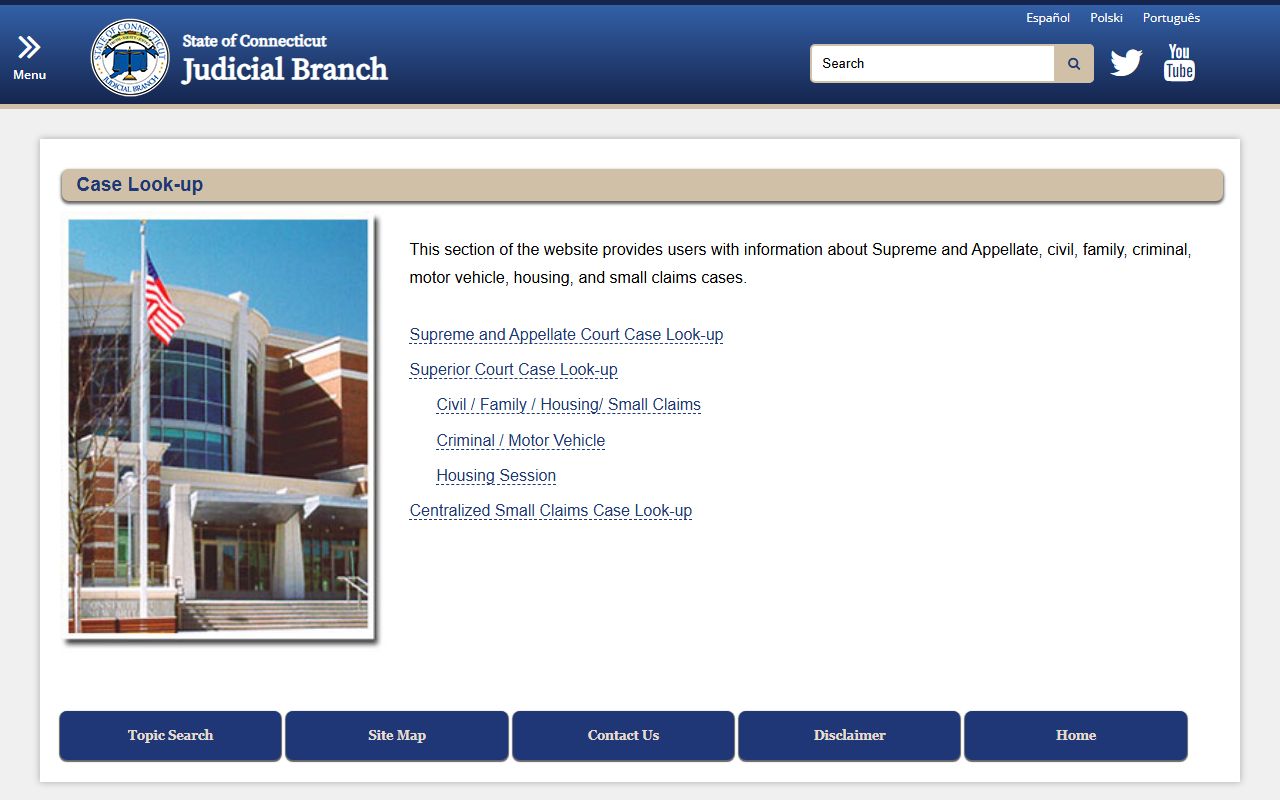
The Judicial Branch maintains separate lookup systems for different case types. Criminal and motor vehicle cases use one portal. Civil, family, and housing cases use another. Supreme and appellate cases have their own search tool. All are accessible through the main judicial website at no cost.
State Police incident reports cover accidents and investigations handled by troopers. Accident Information Summaries are free for 30 days after the crash at accidents.despp.ct.gov. Other incident reports require a $16 non-refundable search fee through the GovQA portal. Payment must be received before any search begins.
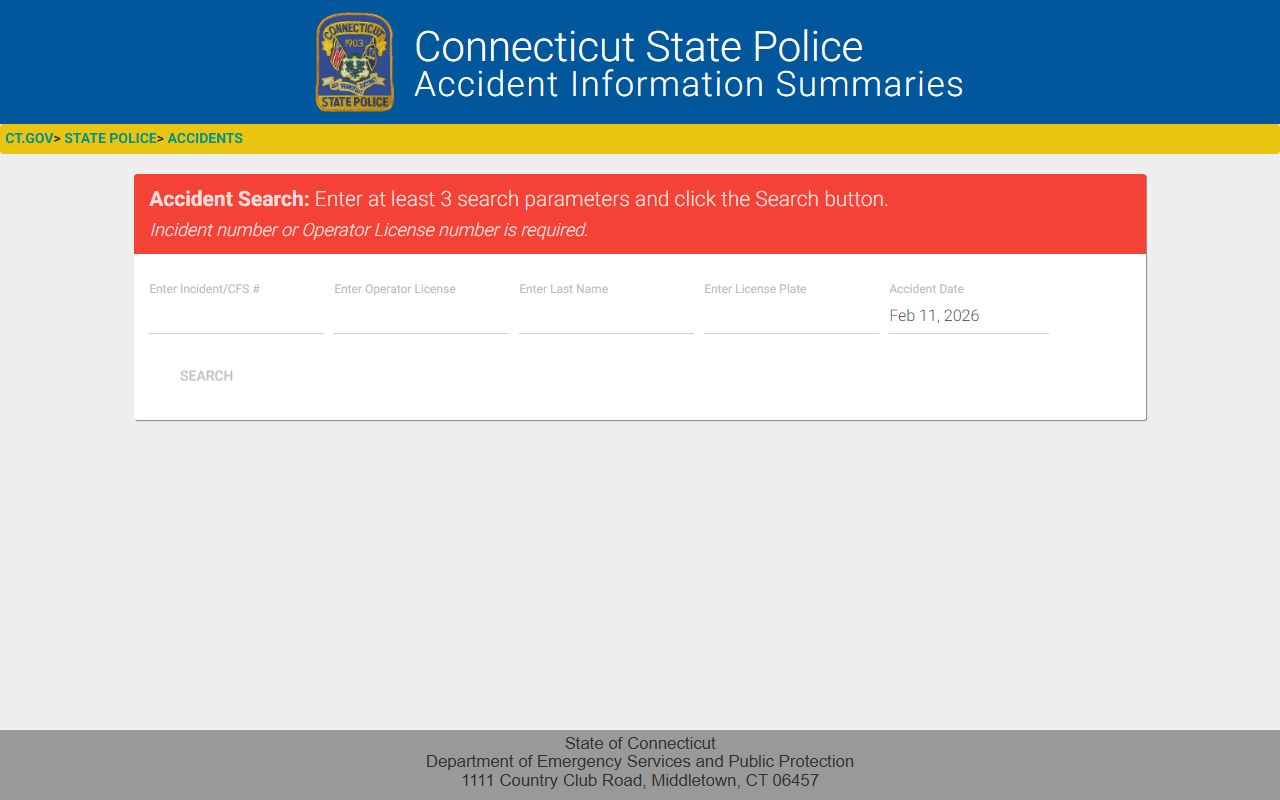
Accident reports provide preliminary details about vehicles, drivers, and incident summaries. Request them online within 30 days at no charge. After that window, use the GovQA system to request archived reports.
The Department of Correction Inmate Search locates current prisoners. This database includes inmates awaiting trial and those serving sentences. Search by name or inmate number to find custody status, facility location, and projected release dates.
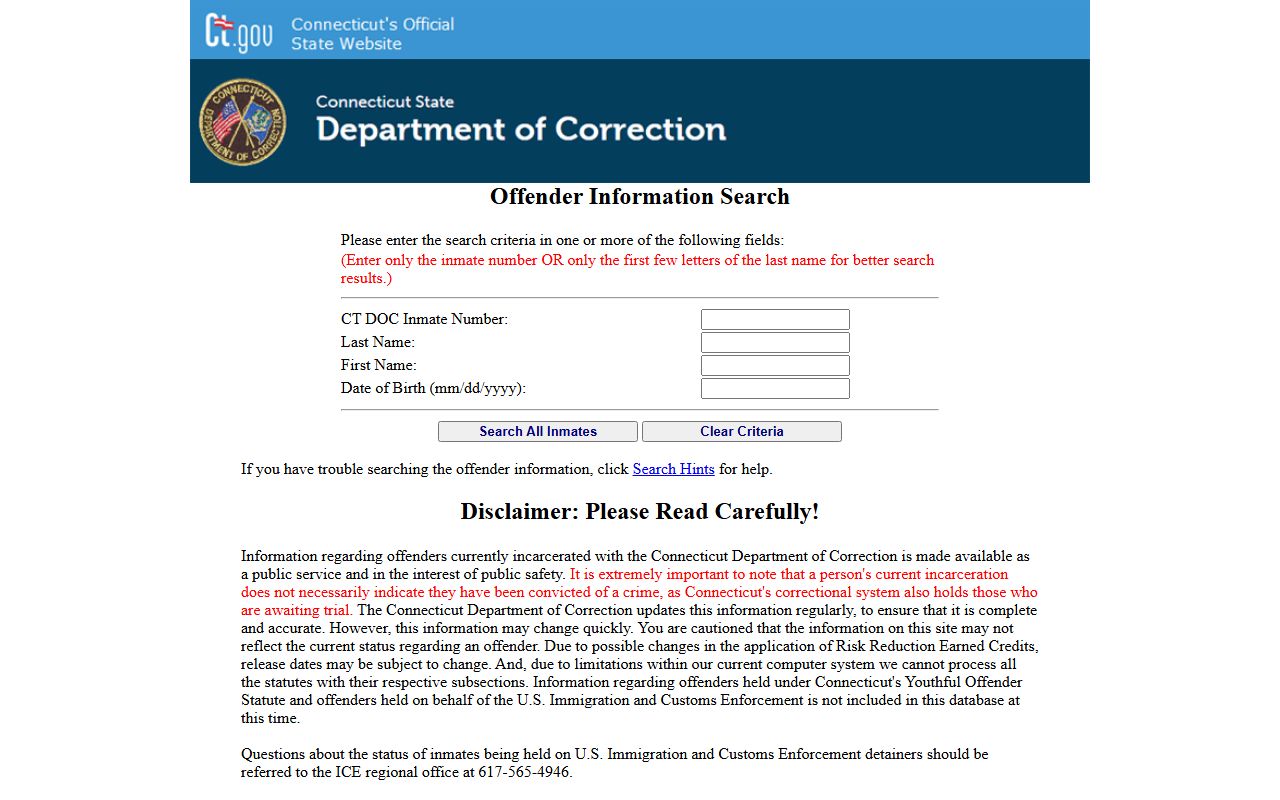
Inmate information is provided as a public service by the DOC. Current incarceration does not always indicate conviction. The system holds pretrial detainees alongside sentenced offenders. Results display housing location, sentence length, and parole eligibility when applicable.
Connecticut Criminal Records Laws and Access
Public access to criminal records in Connecticut is governed by state statutes. The Freedom of Information Act ensures transparency while protecting sensitive information. Several laws define what records are public and who can view them. Understanding these rules helps you know your rights when requesting documents.
CGS § 1-210 establishes that all records maintained by public agencies are public records. This includes most criminal history data held by state police. Citizens have the right to inspect and copy these records during business hours. However, certain exemptions apply to protect ongoing investigations and personal privacy.
CGS § 1-215 specifies that arrest records are public from the time of arrest. These records include the arrestee's name, race, address, date, time, place, and offense charged. Law enforcement may redact witness identities and victim information in sensitive cases.
The Connecticut Freedom of Information Commission enforces public records laws. Located at 165 Capitol Avenue in Hartford, they hear complaints from people denied access to records. Call (860) 566-5682 for assistance with public records requests.
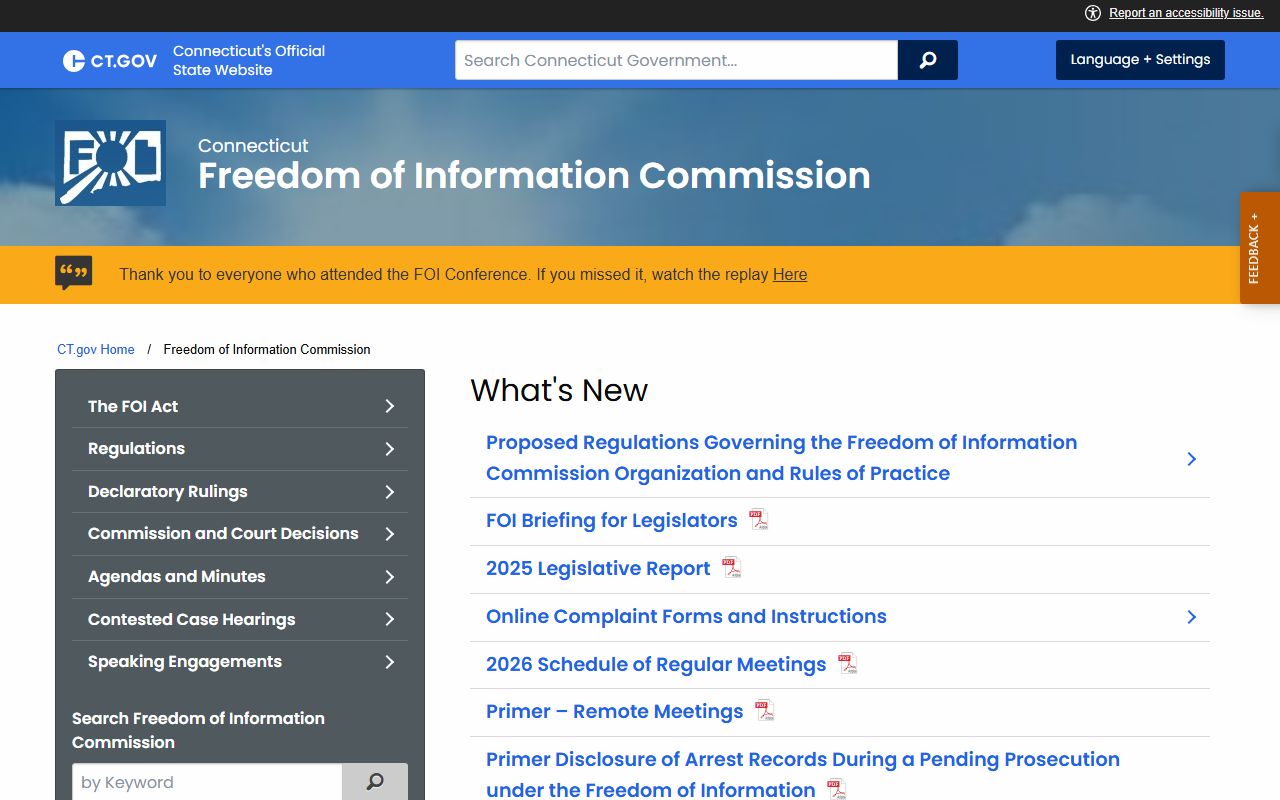
The FOIC provides guidance on requesting records from any state or local agency. They publish resources explaining your rights under Connecticut law. Complaints must be filed within 30 days of a denial.
Criminal Record Fees in Connecticut
Fees for criminal records in Connecticut vary by request type and agency. The State Police Bureau of Identification charges $36 to verify record existence only. For actual conviction history, the fee is $75. Fingerprint-based checks cost $75 plus a $15 fingerprinting service fee. All payments must be separate and in exact amounts.
Payment methods include check, money order, or cash for in-person services. Make checks payable to "Treasurer-State of CT." No credit cards are accepted for mail requests. Fingerprinting appointments require exact cash or separate checks for each fee.
State Police incident reports carry a $16 non-refundable search fee per CGS § 29-10b. This applies whether or not a report is found. Payment is required before any search begins. Use the GovQA portal to submit these requests online.
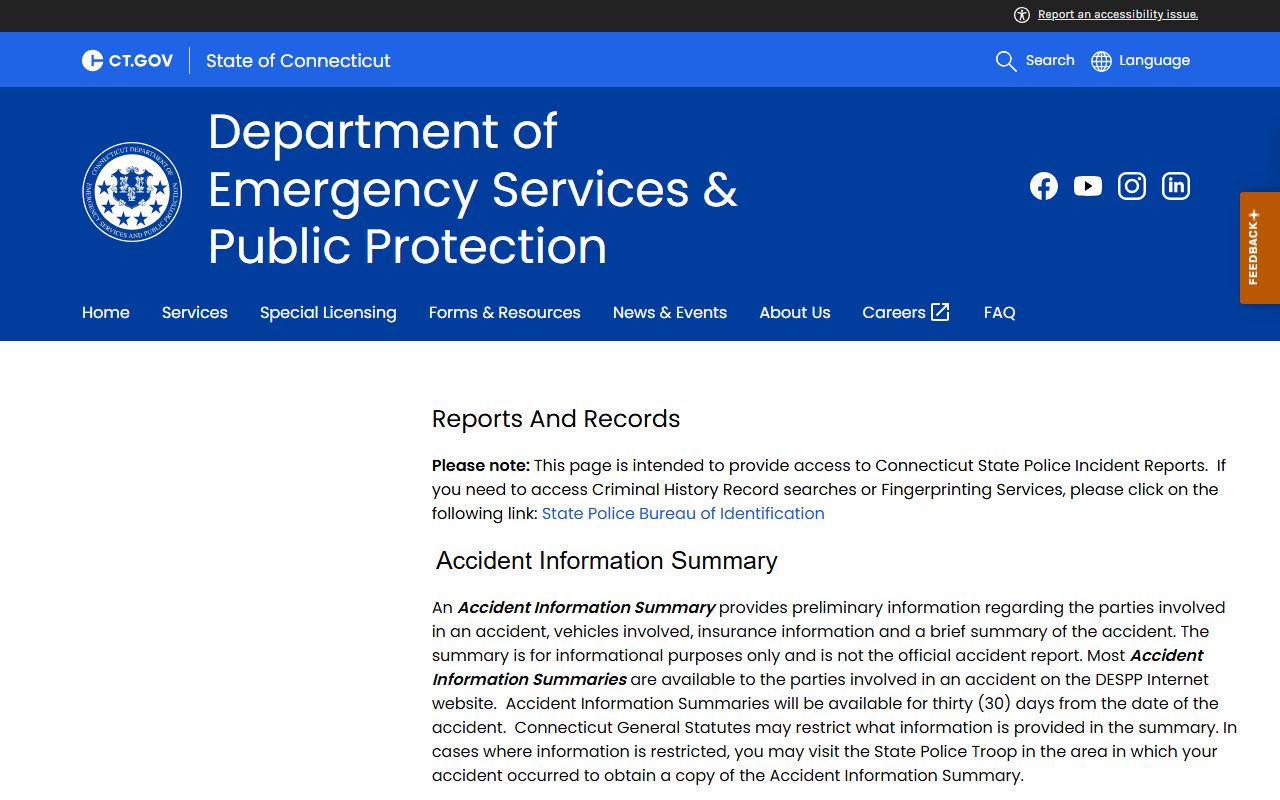
Accident Information Summaries remain free for 30 days from the crash date. Access them at the DESPP accident portal without payment. After 30 days, reports move to the paid GovQA system. Some accident reports also appear on BuyCrash.com within 30 business days.
Judicial Branch case lookups are free through their online portals. There is no charge to search criminal or motor vehicle cases by name or docket number. In-person court record copies may incur small copying fees at the clerk's office.
Note: Fees are subject to change; contact the agency directly to confirm current costs before submitting payment.
Clean Slate and Record Erasure in Connecticut
Connecticut's Clean Slate law provides automatic erasure of certain criminal records. Eligible misdemeanears are erased after seven years from the most recent conviction. Eligible felonies require ten years before automatic erasure. This process resumed in October 2025 after system delays. Approximately 50,000 people have already received record erasures.
Visit the Clean Slate Connecticut portal to check your eligibility status. The website allows you to search your record using your name or case number. You can see which cases have been erased and which remain on file.
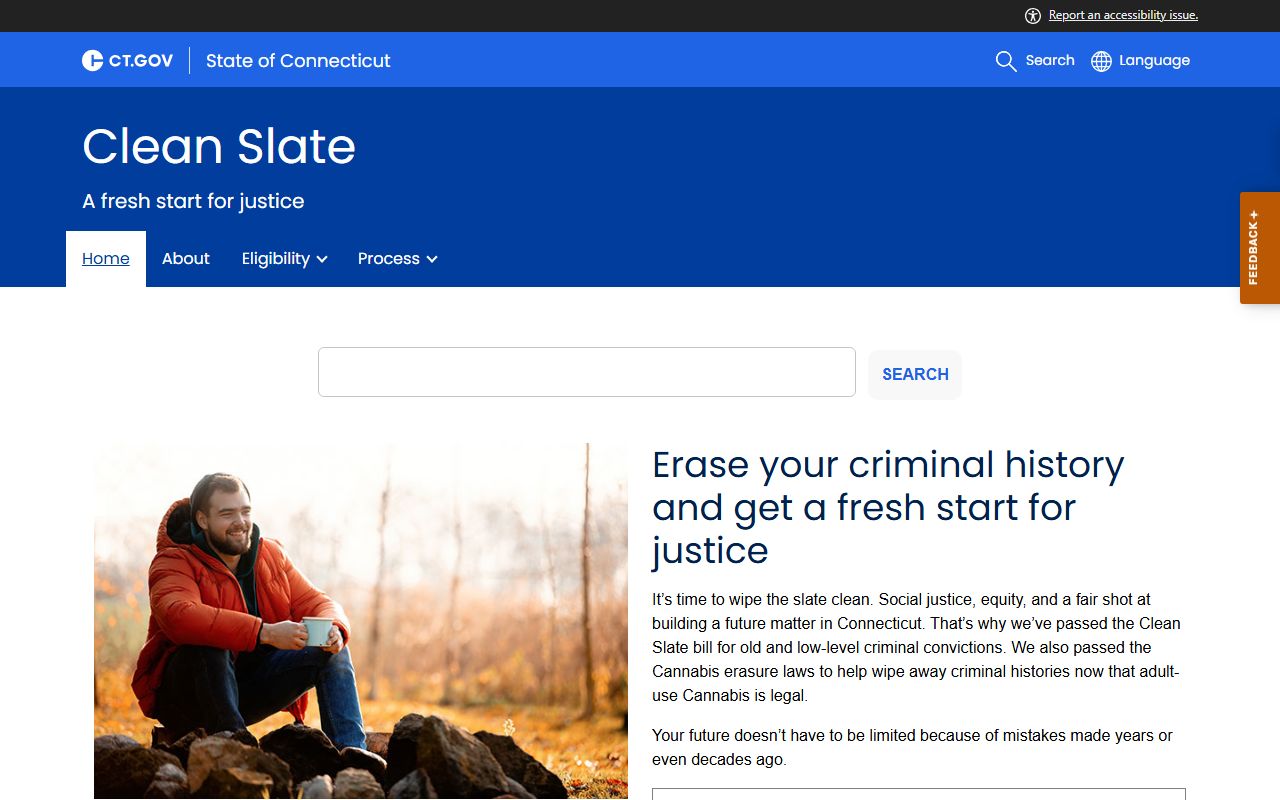
Not all convictions qualify for Clean Slate erasure. Family violence crimes remain on record permanently. Sexual offenses are excluded from automatic erasure. Firearm-related crimes also do not qualify. Other cases may require a petition to the court for erasure consideration.
CGS § 54-142a governs the erasure of criminal records in Connecticut. Records are automatically erased when cases are dismissed or defendants are acquitted. Nolled cases erase after 13 months. Dismissed cases erase after 20 days. Absolute pardons granted since 1974 also trigger automatic erasure.
Once erased, a person may swear under oath that they were never arrested for that offense. Employers cannot ask about erased records on job applications. The law treats erased arrests as if they never occurred. This helps people move forward without past mistakes limiting their opportunities.
Connecticut invested over $5 million to automate the Clean Slate process. The state continues monitoring the system to ensure all eligible people receive erasures. Future erasures are expected to affect more than 100,000 additional records.
Browse Connecticut Criminal Records by County
Connecticut has eight counties with Superior Courts handling criminal cases. Each county falls under one or more judicial districts with State's Attorney offices. Select a county below to find local court information and resources.
Criminal Records in Major Connecticut Cities
City police departments maintain local arrest records and incident reports. Major cities also have Superior Court locations for criminal cases. Choose a city to learn about local record access.