
Fairfield County Court Records and Case Files
Fairfield County criminal records document arrests and court cases from southwestern Connecticut. Fairfield is the most populous county in the state with nearly 950,000 residents. Bridgeport serves as the Fairfield County seat. Three judicial districts handle criminal matters in Fairfield. The Bridgeport, Stamford-Norwalk, and Danbury districts each maintain separate court records. This guide explains how to search Fairfield case files and obtain public documents.
Fairfield County Criminal Records Overview
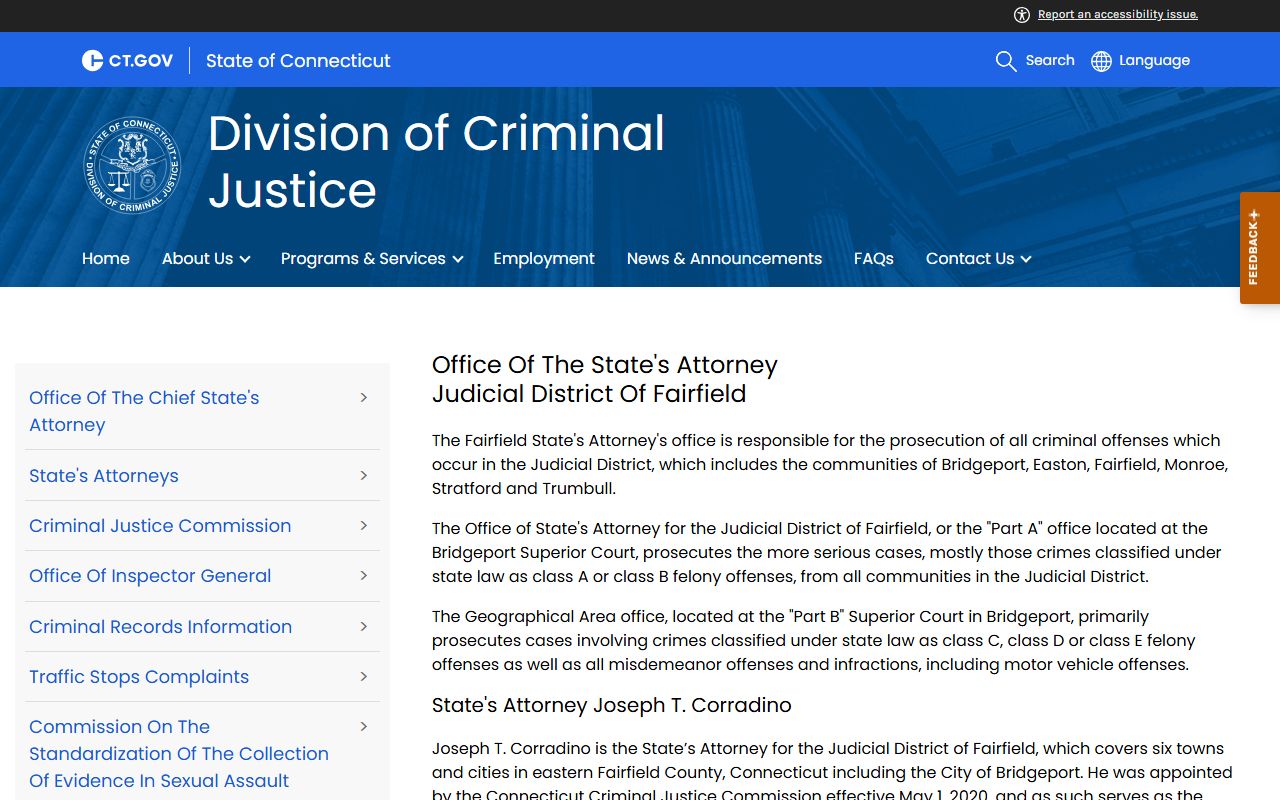
Fairfield County spans the southwestern corner of Connecticut. Criminal records in Fairfield are maintained across three judicial districts. The State's Attorney prosecutes cases throughout Fairfield County. Joseph T. Corradino serves as the chief prosecutor for Fairfield criminal matters. His office works with courts in Bridgeport, Stamford, and Danbury to process Fairfield cases.
The Fairfield State's Attorney oversees felony prosecutions in Fairfield County. The office handles serious criminal cases from all 23 Fairfield towns. Bridgeport, Stamford, and Norwalk contribute the highest volume of Fairfield cases. Smaller towns in Fairfield like Greenwich and Westport also generate court records. The State's Attorney office does not provide direct public record access for Fairfield.
Local police departments across Fairfield County maintain arrest records. Bridgeport Police, Stamford Police, and Danbury Police each document Fairfield incidents. Greenwich Police and Norwalk Police also keep Fairfield records. These departments work with the State's Attorney to build Fairfield criminal cases. Their reports form the basis of court files in Fairfield Superior Courts.
Bridgeport Superior Court Criminal Records
The Bridgeport Superior Court serves eastern Fairfield County. This courthouse sits at 172 Golden Hill Street in Bridgeport. Bridgeport is the largest city in Fairfield County and serves as the county seat. The court handles criminal cases from Bridgeport, Stratford, Milford, and Trumbull in Fairfield. Call (203) 579-6562 to reach the Fairfield clerk's office.
Criminal records at Bridgeport Superior Court include Fairfield felonies and misdemeanors. The court maintains files for all Fairfield cases heard at this location. Arrest warrants, charging documents, and court orders fill these Fairfield files. Under CGS § 1-210, Fairfield County records are open to public inspection.
Visitors to the Bridgeport courthouse should bring Fairfield case details. The clerk needs names, dates, or docket numbers from Fairfield matters. Copies of Fairfield court documents cost a small fee per page. Certified copies for official use require additional payment in Fairfield. The Bridgeport location processes the highest volume of Fairfield criminal cases.
Fairfield County residents can search Bridgeport court records in person. The Judicial Branch also offers online lookup for Fairfield cases. The portal shows Fairfield charges, court dates, and final dispositions. Both active and closed Fairfield matters appear in the database.
Stamford and Danbury Court Locations
The Stamford-Norwalk Judicial District covers southern Fairfield County. The Stamford Superior Court stands at 123 Hoyt Street in Stamford. This courthouse serves Stamford, Norwalk, Greenwich, Darien, and New Canaan in Fairfield. Call (203) 965-5213 for Fairfield case inquiries. The building handles Fairfield criminal matters alongside civil and family cases.
Coastal towns in this district contribute varied caseloads to Fairfield courts. White-collar crimes mix with motor vehicle and felony charges in Fairfield. Criminal records here follow standard Connecticut access rules for Fairfield. Arrest reports and conviction data remain open to the Fairfield public. CGS § 1-215 makes Fairfield arrest information public from the moment of arrest.
The Danbury Superior Court sits at 146 White Street in Danbury. This northern Fairfield courthouse serves Danbury, Ridgefield, Bethel, and Newtown. Contact the Fairfield clerk at (203) 207-8600 for record help. The Danbury Judicial District extends beyond Fairfield County into nearby areas. Criminal cases from northern Fairfield flow through this courthouse.
Both Stamford and Danbury maintain separate Fairfield docket systems. Each has unique case numbers and filing procedures for Fairfield. Know which district handled a Fairfield arrest before visiting. This ensures you reach the right Fairfield courthouse for your search.
Police Department Records in Fairfield County
Fairfield County police departments create the first criminal records. Their incident reports document Fairfield arrests and investigations. These reports form the basis of court files in Fairfield Superior Courts. Fairfield residents can request police records from multiple agencies.
The Bridgeport Police Department Records Division serves the largest Fairfield city. Their office sits at 300 Congress Street in Bridgeport. Call (203) 581-5270 for Fairfield arrest record requests. The records division operates during regular Fairfield business hours. They process requests for Fairfield incident reports and arrest logs.
Stamford Police and Danbury Police maintain Fairfield records divisions too. Each follows Connecticut's Freedom of Information Act. This law governs access to Fairfield police documents. Records include suspect names, charges, dates, and Fairfield arrest locations. Police must provide these documents to requesting Fairfield citizens.
Smaller Fairfield towns have independent police departments. Westport, Fairfield, Greenwich, and Norwalk each keep local records. Contact the specific department that made a Fairfield arrest. State Police troops also patrol Fairfield County and create separate records.
Types of Fairfield County Criminal Records Available
Several record types document criminal activity in Fairfield. Each serves a different purpose for Fairfield requesters. Understanding these distinctions helps you find the right Fairfield documents.
Court case files contain comprehensive Fairfield criminal histories. These files include warrants, charges, motions, and orders from Fairfield. Final judgments appear in Fairfield case files too. The Judicial Branch keeps these at the Fairfield courthouse that heard the case.
Police incident reports provide early accounts of Fairfield crimes. Officers write these at Fairfield arrest scenes or shortly after. They contain witness statements and evidence descriptions from Fairfield. CGS § 1-210 governs access to Fairfield police records.
Conviction history records show Fairfield case outcomes. These prove whether Fairfield charges ended in guilty pleas or verdicts. The State Police Bureau provides official Fairfield conviction history. Their Middletown office processes requests for all Fairfield County matters.
Online Search Options for Fairfield County Cases
The Connecticut Judicial Branch Criminal Look-up covers Fairfield cases. This portal includes all three Fairfield judicial districts. Users search Fairfield records by name or docket number. Results show Fairfield charges, court dates, and case status.
Fairfield online records update as courts process filings. The database includes pending and closed Fairfield matters. Motor vehicle cases appear with Fairfield criminal charges. This tool helps avoid trips to Fairfield courthouses.
The Department of Correction Inmate Search finds Fairfield prisoners. This database shows inmates from all Fairfield towns. Results include housing, sentences, and release dates for Fairfield. Pretrial detainees appear with sentenced Fairfield offenders.
Official Fairfield rap sheets require mail requests. No online system exists for Fairfield criminal history checks. Submit form DPS-0846-C to the State Police office. Results reach Fairfield requesters by mail within weeks.
Clean Slate and Record Erasure in Fairfield County
Connecticut's Clean Slate law helps many Fairfield residents. Eligible Fairfield misdemeanors erase after seven years. Fairfield felonies need ten years for automatic erasure. The Clean Slate Connecticut portal lets Fairfield residents check eligibility.
Not all Fairfield convictions qualify for Clean Slate relief. Family violence crimes stay on Fairfield records forever. Sexual and firearm offenses also fail to qualify in Fairfield. Other Fairfield cases may need court petitions for erasure.
CGS § 54-142a governs Fairfield record erasure. Dismissed Fairfield cases erase automatically after set periods. Nolled Fairfield matters erase after 13 months. Erased Fairfield arrests legally never occurred.
Bridgeport, Stamford, Danbury, and other Fairfield residents can check their status. The portal shows which Fairfield cases have been erased. This helps Fairfield individuals understand their records. It guides those seeking manual erasure of non-qualifying Fairfield cases.
Fairfield County Court Hours and Access
All three Fairfield County Superior Courts operate similar hours. Doors open at 9:00 AM on weekdays. Courts close at 5:00 PM Monday through Friday. Some Fairfield clerk offices close for lunch from noon until 1:00 PM. Call ahead to confirm hours before visiting any Fairfield location.
Parking near Fairfield courthouses varies by location. Bridgeport offers street parking and nearby garages. Stamford provides garage parking near the Hoyt Street courthouse. Danbury has metered street parking around the White Street building. Arrive early to find parking and pass through security screening.
Security screening is required at all Fairfield County courts. Visitors must pass through metal detectors at entry points. Bags and purses are subject to search by court security staff. Electronic devices are generally allowed in Fairfield courtrooms. Photography and recording are prohibited without judicial permission.
Accessibility accommodations are available at all Fairfield courthouses. Contact the court in advance for special assistance needs. Wheelchair access is provided at all public entrances. Language interpretation services can be arranged for Fairfield court proceedings.
Requesting Criminal History Records
The State Police Bureau of Identification maintains official criminal histories. Their office at 1111 Country Club Road in Middletown processes requests from across the state. Residents can request rap sheets by mail using form DPS-0846-C. The $36 fee confirms record existence while the $75 fee provides full conviction history.
Fingerprint-based checks offer more accurate results for individuals with common names. Schedule appointments through the DESPP online booking system. Complete pre-enrollment at the Idemia website before your visit. Bring valid photo identification and payment in exact amounts. Results arrive by mail within two to four weeks.
The Freedom of Information Commission in Hartford enforces public records access. They hear complaints from citizens denied records by any agency. Contact them at (860) 566-5682 for assistance with denied requests. The FOIC publishes guides explaining rights under Connecticut law. File complaints within 30 days of any denial.
Understanding your rights helps you obtain the records you need. Agencies must respond to requests within four business days. They may charge reasonable fees for copies and search time. Denials must cite specific statutory exemptions that apply to your request. Appeal rights exist for any improper denial of public records.
Understanding Court Records and Docket Information
Court records contain detailed information about each criminal case. Docket sheets list every action taken by the court. They show filing dates, hearing schedules, and judicial orders. Each entry includes the date and description of the court action taken.
Case files include the original arrest warrant and charging document. These papers identify the defendant and list specific charges. They cite the statutes allegedly violated by the defendant. Plea agreements appear in files when defendants negotiate with prosecutors.
Sentencing records show the final outcome of criminal cases. They document fines, probation terms, and incarceration periods. Restitution orders appear for cases involving financial losses to victims. These records remain accessible long after cases conclude.
Appeals from Superior Court decisions go to the Appellate Court. Supreme Court appeals handle the most significant legal questions. Appellate records include briefs, transcripts, and court opinions. These documents trace the development of Connecticut criminal law.
Working with Court Clerks and Staff
Court clerks serve as the primary contact for record requests. They maintain the official files for all cases within their courthouse. Clerks can help you locate specific documents within case files. They also process requests for certified copies of court orders.
Be prepared when visiting a clerk's office. Bring specific information like names, dates, or case numbers. Vague requests take longer to process and may yield incomplete results. Clerks cannot provide legal advice about the contents of records.
Copy fees vary by courthouse and document type. Standard copies typically cost one dollar per page. Certified copies with official seals cost more than standard copies. Payment methods may include cash, check, or money order.
Some records may be restricted from public access. Sealed cases require court orders to view. Expunged records are removed from public access entirely. Juvenile records have separate access rules from adult cases.
Record Retention and Archival Policies
Courts maintain records for specified periods according to state regulations. Most criminal case files remain available for decades after cases close. Older records may be transferred to state archives for long-term storage. Archival records can still be accessed with proper advance notice.
Electronic records have become standard in modern court operations. The Judicial Branch continues digitizing older paper files. Electronic access improves efficiency for both courts and requesters. Not all historical records have been converted to digital format.
Microfilm copies preserve records from earlier decades. These archives contain cases from the twentieth century. Researchers may need special equipment to view microfilm records. Staff can assist with accessing these historical materials.
Destruction schedules apply to certain record types after time periods expire. Summonses and minor traffic citations may be destroyed sooner than felony files. Courts follow strict protocols before destroying any official documents. Notice requirements ensure records are not destroyed prematurely.
Related Criminal Record Resources
Residents may need records from nearby areas. Fairfield County borders New York State to the south. Interstate cases may involve Westchester County records. State Police maintain records crossing Fairfield county lines.